You wake up, swing your legs out of bed, and your lower back grabs. Or you stand up after a morning at the laptop and feel that dull, familiar ache just above the pelvis. Maybe it started after lifting something awkwardly. Maybe there wasn't one clear moment at all. That uncertainty is what unsettles people most.
The good news is that most lower back pain is mechanical, which means it usually comes from joints, muscles, discs, ligaments, movement habits, or a temporary loss of strength and control rather than from anything sinister. In UK practice, the most useful question usually isn't “What's the one magic remedy?” It's “What's the right next step for my type of pain?”
That's where most advice falls short. You'll often find lists of stretches, heat packs, massage guns, yoga poses, and posture tips, but not a clear route from self-care to professional assessment. If you want the best relief for lower back pain, you need a pathway. First calm it down, then restore movement, then rebuild strength, and know when symptoms mean it's time for a proper assessment.
Table of Contents
- Understanding Why Your Lower Back Hurts
- What to Do For Immediate Lower Back Pain Relief
- Building a Pain-Proof Back With Simple Exercises
- When to Consider Professional Non-Surgical Treatments
- How to Know If You Need a Professional Assessment
- Your Personalised Pathway to a Pain-Free Back
Understanding Why Your Lower Back Hurts
Most back pain is mechanical, not mysterious
Think of the lower back like a hinge with support cables. The hinge is your spine and pelvis working together. The cables are muscles and connective tissues that guide and control movement. If one part gets overloaded, stiff, tired, or poorly coordinated, the whole system starts complaining.
That's why back pain often appears after ordinary life rather than dramatic injury. A long drive, a new gym session, lifting a child repeatedly, a day in the garden, or too many hours sitting can all irritate the same area in different ways. It doesn't always mean damage. Often it means the tissues have become sensitive and the system has lost its normal rhythm.
Most lower back pain feels alarming because it affects walking, sitting, bending, and sleep. But alarming doesn't automatically mean dangerous.
Mechanical pain tends to behave in recognisable ways. It may feel worse first thing in the morning, after sitting still, when turning in bed, or when straightening up after bending. It may ease once you get moving, then return when you overdo things. That pattern matters.
If you want a fuller plain-English explanation of the common patterns, this clear guide to why your back hurts is a useful companion.
Common triggers I see again and again
Some causes are so common that patients often recognise themselves immediately:
- Desk stiffness: Sitting for hours leaves hips stiff, trunk muscles underused, and the lower back doing too much when you finally stand up.
- Unaccustomed effort: Weekend jobs, DIY, lifting boxes, or a hard training session can overload tissues that weren't prepared for that demand.
- Repeated bending and twisting: Not one big lift, but many small awkward movements, can be enough.
- Guarding after pain starts: Once the back hurts, people move less, brace harder, and become even stiffer. That often prolongs the problem.
A short table makes this easier to spot:
| Everyday pattern | What it often leads to |
|---|---|
| Long sitting | Stiff hips, tight feeling on standing, ache across the belt line |
| Sudden lift or twist | Local spasm, sharp catch on movement |
| Repeated bending | Gradually worsening soreness, fatigue, difficulty straightening |
| Reduced activity after a flare | More stiffness, loss of confidence in movement |
What pain does and doesn't mean
Pain is useful, but it isn't a perfect measure of injury. A very sore back can still recover well. A mild ache can still linger if the underlying movement pattern doesn't change. The aim is to read the pattern properly, not panic at every twinge.
In practice, the best relief for lower back pain usually starts when people stop doing two things. They stop assuming they must rest completely, and they stop assuming they should push through anything. The middle ground is nearly always more effective.
What to Do For Immediate Lower Back Pain Relief
The first aim is to settle the flare-up without stiffening the back
When the back has just flared, don't go to extremes. Complete bed rest usually backfires, but charging on as if nothing's happened can stir it up further. What works better is relative rest. That means reducing the movements that sharply aggravate symptoms while keeping some gentle movement going.
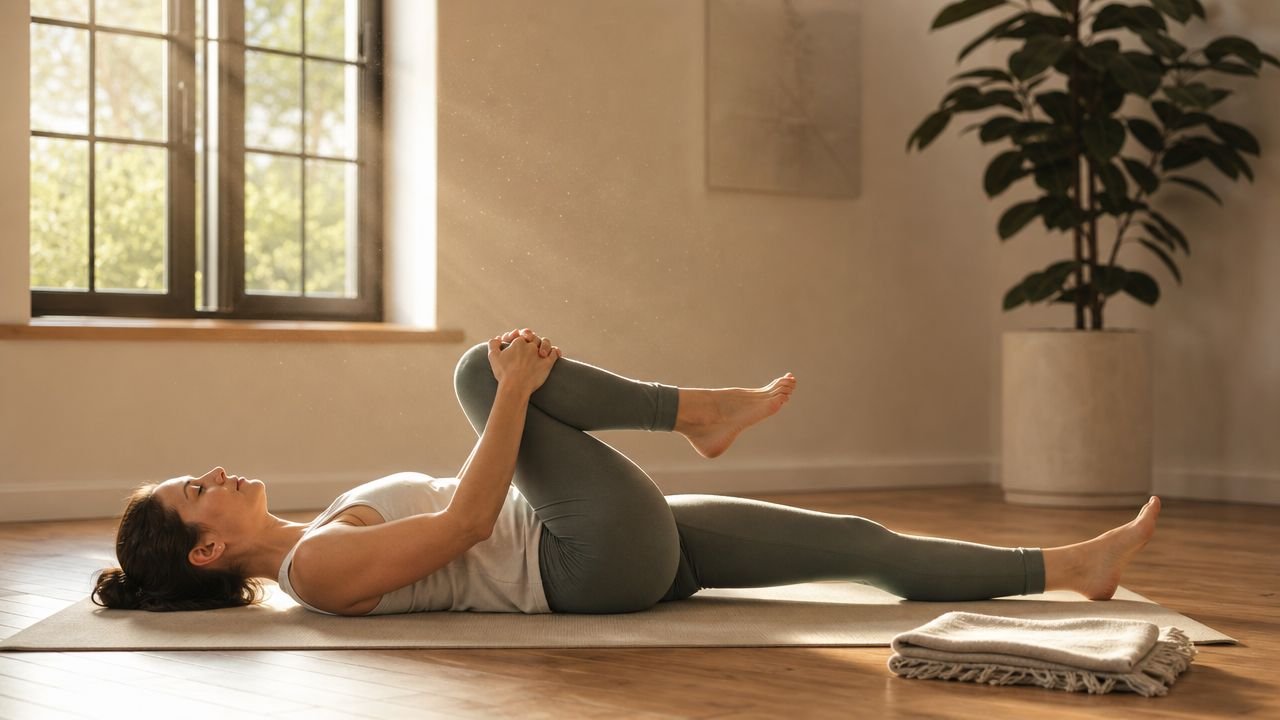
Try short, frequent walks around the house. Change position before stiffness builds. If sitting is painful, use a firmer chair and stand up regularly. If standing is worse, break tasks into short spells and sit down before the ache escalates.
The old advice to lie flat for days isn't what UK guidance supports. The more useful principle is to keep the body engaged without repeatedly provoking the same sharp pain.
When to use ice and when to use heat
This is one of the few home treatments people can apply immediately, but timing matters. Cold is usually the better choice early in an acute inflammatory flare because it can lower swelling and pain. Heat is usually more helpful after about 48 hours or for chronic stiffness because it increases blood flow and helps relax muscle spasm. UK clinical advice recommends limiting either to 15 to 20 minutes. That practical heat-versus-cold distinction is outlined in Harvard Health's guidance on home remedies for low back pain.
If you're unsure, use the symptom pattern as your guide:
- Fresh strain or flare after activity: Cold often suits it better.
- Stiff, tight, protective muscles: Heat often helps more.
- Before mobility work: Heat can make movement easier.
- After you've overdone it: Cold may settle the reaction.
If you want more practical examples, this explanation of pulled muscles and the ice vs heat debate covers the trade-offs clearly.
Practical rule: Use temperature to make movement easier, not to replace movement altogether.
A simple plan for the first few days
A simple structure is typically effective:
Reduce the obvious aggravators
Avoid repeated deep bending, heavy lifting, and long static positions for now.Keep moving in small doses
Walk little and often. Gentle knee rolls, pelvic rocking, or lying with knees bent can help if they feel easing rather than irritating.Use heat or cold deliberately
Match it to the phase of pain. Keep applications brief and protect the skin.Sleep comfortably, not perfectly
Side sleeping with a pillow between the knees, or lying on your back with pillows under the knees, often reduces strain.Watch the direction of symptoms
Pain that stays local is often less concerning than pain that starts spreading down the leg or is joined by numbness or weakness.
The best relief for lower back pain in the first days is rarely dramatic. It's usually a steady reduction in spasm, less fear of movement, and a gradual return to ordinary activities.
Building a Pain-Proof Back With Simple Exercises
Why exercise works better than waiting for the back to behave
Once the sharp edge starts to settle, the focus has to change. Relief matters, but resilience matters more. In UK practice, the strongest general message is to get people moving again. NICE guidance for adults with low back pain and sciatica recommends an active, function-focused approach, encourages people to keep moving and return to normal activities as soon as possible, and says routine imaging isn't needed unless serious underlying disease is suspected, as summarised in this UK-focused overview of lower back pain relief.
That matters because a back that only receives passive treatment often becomes a back that needs repeated rescue. A back that gradually relearns movement, loading, and confidence usually becomes more dependable.
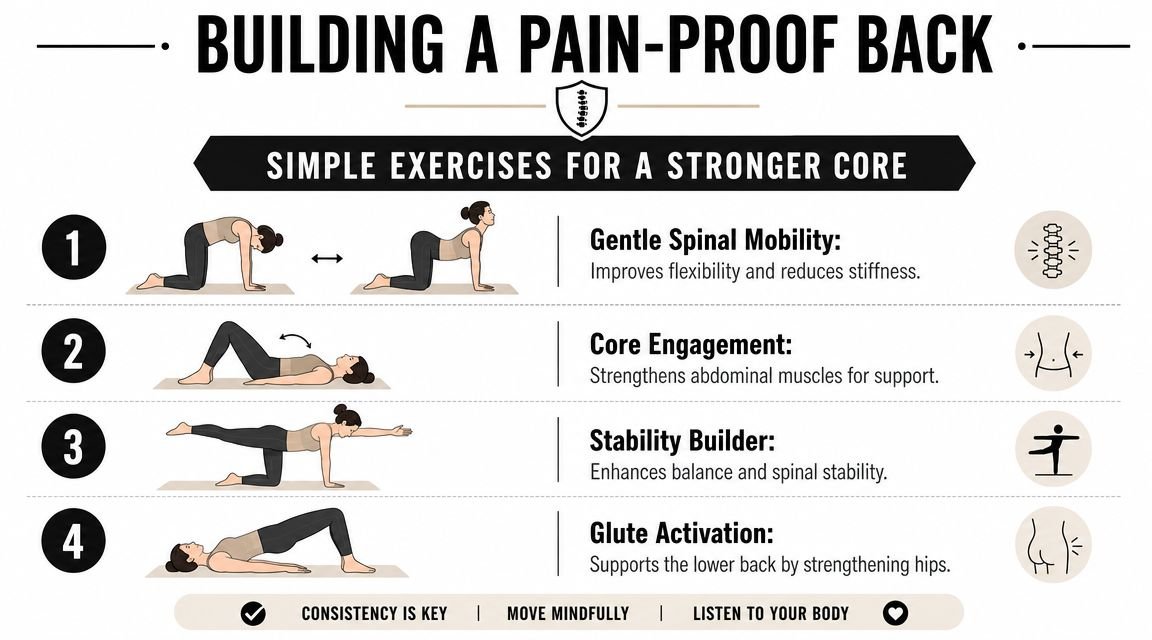
Here's a visual summary of the core routine:
Four foundation exercises worth doing well
These aren't flashy. That's the point. They build control.
Cat-cow for spinal mobility
Move slowly between a gentle rounded back and a gentle arched back on hands and knees. This often helps people who feel locked up after sitting.
Its value isn't in stretching aggressively. It's in reminding the spine that movement is safe again.
Pelvic tilts for low-load control
Lie on your back with knees bent. Gently flatten the lower back into the floor, then release. Small movement is enough.
This wakes up the abdominal wall and pelvis without asking too much from sore tissues. It's especially useful for people who brace too hard and have forgotten how to move the pelvis independently.
A more detailed home programme is available in these lower back strengthening exercises.
Bird-dog for stability
On hands and knees, reach one leg back and the opposite arm forwards if tolerated. If that feels too much, start with the leg only.
This teaches the trunk to stay steady while the limbs move. That's a basic skill for walking, lifting, and carrying.
Lead with quality, not effort:
- Keep the spine quiet: Don't twist or tip the pelvis.
- Make the reach long, not high: Height usually turns it into a balance trick.
- Stop before symptoms spread: Mild effort is fine. Leg pain or sharp catching isn't.
A short demonstration can help if you prefer to follow along:
Bridge for glutes and hip support
Lie on your back with knees bent and lift the hips gently. Pause, then lower with control.
Many sore backs are doing work the hips should be sharing. Bridges bring the gluteal muscles back into the job. That can reduce the sense that all effort is being dumped into the lumbar spine.
Done consistently, simple exercises change the back from something you protect all day into something you trust again.
Daily habits that stop progress unravelling
Exercise helps most when the rest of the day supports it.
| Daily situation | Better option |
|---|---|
| Desk work | Stand up regularly, change position, keep the screen at eye level |
| Lifting shopping or children | Hinge at the hips, keep the load close, avoid twisting while lifting |
| Long drives | Take short breaks, walk briefly, reset posture before pain builds |
| Evening slump on the sofa | Use support, then get up and move before stiffness settles in |
The best relief for lower back pain over the long term isn't one perfect stretch. It's regular, tolerable loading. A few sensible movements done often will beat heroic exercise done once and abandoned.
When to Consider Professional Non-Surgical Treatments
A common turning point is this. The first few days are manageable with heat, gentle movement, and sensible pacing, but after a couple of weeks the pain is still dictating how you sit, sleep, work, or lift. That is usually the point to stop guessing and get the problem properly assessed.
In clinic, the question is rarely "Do you need treatment?" The better question is "What kind of problem is this, and what is most likely to help now?" Lower back pain can come from several overlapping mechanical patterns, including joint irritation, disc-related pain, muscle guarding, hip stiffness, or nerve sensitivity. Those patterns can look similar from the outside, but they do not respond equally well to the same advice.
That is the gap in much generic back pain advice. People are told to stretch, strengthen, rest, or use ice, but not how to choose the right next step when progress stalls. A good UK care pathway is more practical. Start with self-care for a simple strain. Escalate to a hands-on professional when recovery stops being steady, when the pain keeps returning, or when the pattern becomes less clear.
What osteopathy and acupuncture are trying to achieve
For persistent low back pain, UK guidance supports active rehabilitation, and the evidence review behind that guidance found better results when exercise is matched to the presentation and combined, where appropriate, with manual therapy. That approach is discussed in this evidence review on chronic low back pain management.
In practice, the trade-offs matter:
| Approach | Strengths | Limits |
|---|---|---|
| Heat, massage, rest | Can calm pain and reduce stiffness in the short term | Usually does not build lasting tolerance for bending, walking, lifting, or sitting |
| Exercise alone | Improves strength, movement confidence, and long-term resilience | Hard to pitch correctly if the back is very irritable or pain is spreading |
| Manual therapy plus exercise | Can settle guarding, improve movement, and make rehab easier to tolerate | Works best when the exercises are followed through and reviewed if symptoms change |
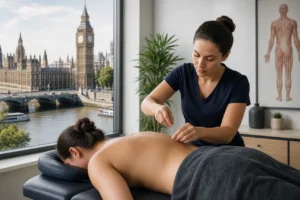
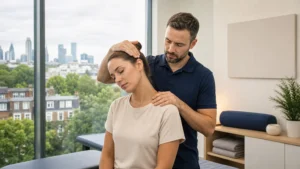
Osteopathy is usually used to improve how the back and hips move, reduce protective muscle tension, and help the person return to normal activity with less fear and less flare-up risk. Treatment may include hands-on joint mobilisation, soft tissue work, advice on pacing, and a clear plan for what to do between appointments.
Acupuncture is often used for a different reason. It may help reduce pain sensitivity and muscle tension enough for someone to move more freely again. For some people that is useful, particularly when pain has been persistent or the muscles stay tightly guarded. On its own, though, it is rarely the full answer.
What a sensible treatment plan looks like
A worthwhile non-surgical plan should give you three things. A working diagnosis of the pain pattern. Short-term relief that helps you move and sleep more normally. A realistic route back to bending, walking, lifting, exercise, and work without constant flare-ups.
That plan should also be reviewed against response, not fixed rigidly from day one. If hands-on treatment helps for 24 hours but nothing changes after that, the exercise plan may need adjusting. If exercise keeps stirring things up, the dosage may be wrong, or the pain may be more nerve-led than originally thought.
If you want to understand how that process works in practice, this page on osteopathy for back pain explains what assessment and treatment typically involve. Laurens Holve Healthcare offers osteopathy and acupuncture as part of this kind of non-surgical care pathway.
The best treatment plan is the one that reduces pain enough to restore normal movement, then steadily makes you less dependent on treatment.
How to Know If You Need a Professional Assessment
Signs that mean get checked
A professional assessment isn't a last resort. It's often the right next step when the pain pattern stops being straightforward.
One of the most helpful ideas in UK-facing advice is knowing when to escalate from home care. People with ongoing pain, recurrent episodes, or symptoms such as leg pain or numbness may benefit from clinical evaluation to identify specific mechanical sources like sciatica. More exercise isn't always the whole answer if the driver is nerve irritation or joint dysfunction, as noted in NCCIH guidance on low back pain and complementary approaches.
That means an assessment is sensible if any of these sound familiar:
- The pain keeps returning: It settles, then comes back with ordinary tasks.
- It's travelling: Pain is spreading into the buttock or down the leg.
- You're getting mixed results from exercise: Some movements help, others clearly aggravate, and you can't tell why.
- Your confidence is dropping: You're avoiding bending, walking, lifting, or exercise because the back feels unreliable.
- Home care has stalled: You're no longer improving in a meaningful way.
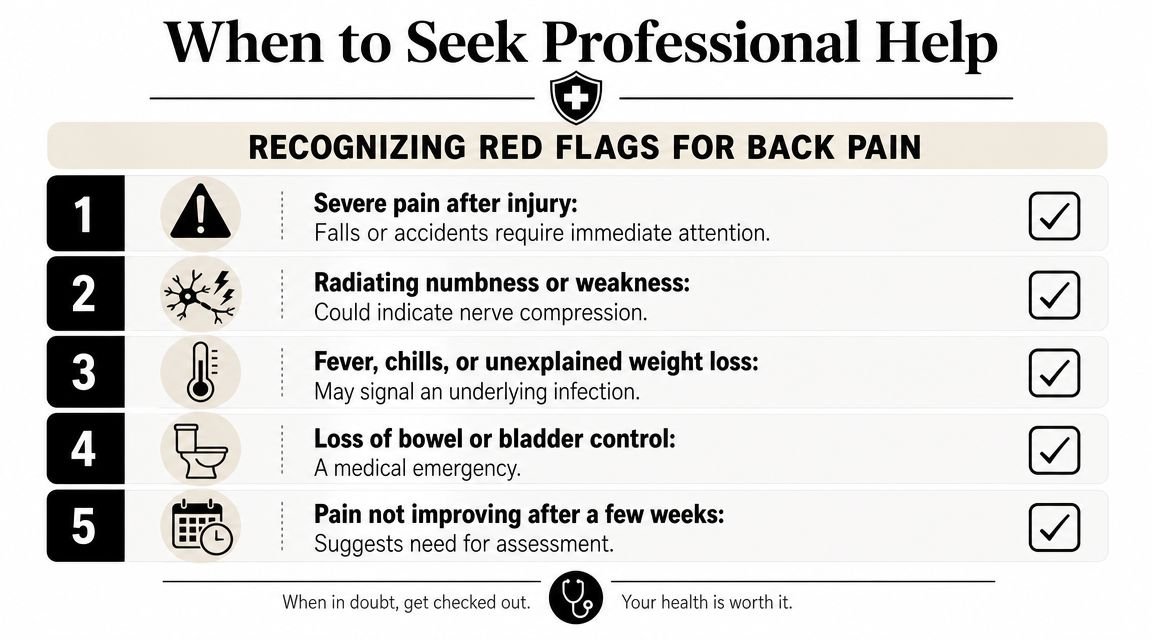
Red flags that need urgent medical attention
Some symptoms need medical review promptly rather than routine musculoskeletal assessment.
- Severe pain after a fall, crash, or other injury
- Numbness, tingling, or weakness that's progressing
- Fever, chills, or unexplained weight loss with back pain
- Loss of bowel or bladder control
- Pain that isn't improving after a few weeks, especially if it's worsening rather than easing
If your symptoms fit that picture, seek urgent medical advice.
A useful practical distinction is this. Common mechanical back pain usually changes with movement and posture. Red flag pain often comes with other concerning symptoms, or it behaves in a way that doesn't fit the normal mechanical pattern.
Your Personalised Pathway to a Pain-Free Back
A practical route most people can follow
The biggest gap in most online advice is simple. It tells you what exists, but not when to use it. That's why people bounce between stretching, resting, heating, searching symptoms, and hoping time sorts it out. A clearer pathway is far more useful. That need for a proper route from self-management to professional assessment is highlighted in this discussion of treatment pathways for lower back pain.
Here's the pathway in one view:
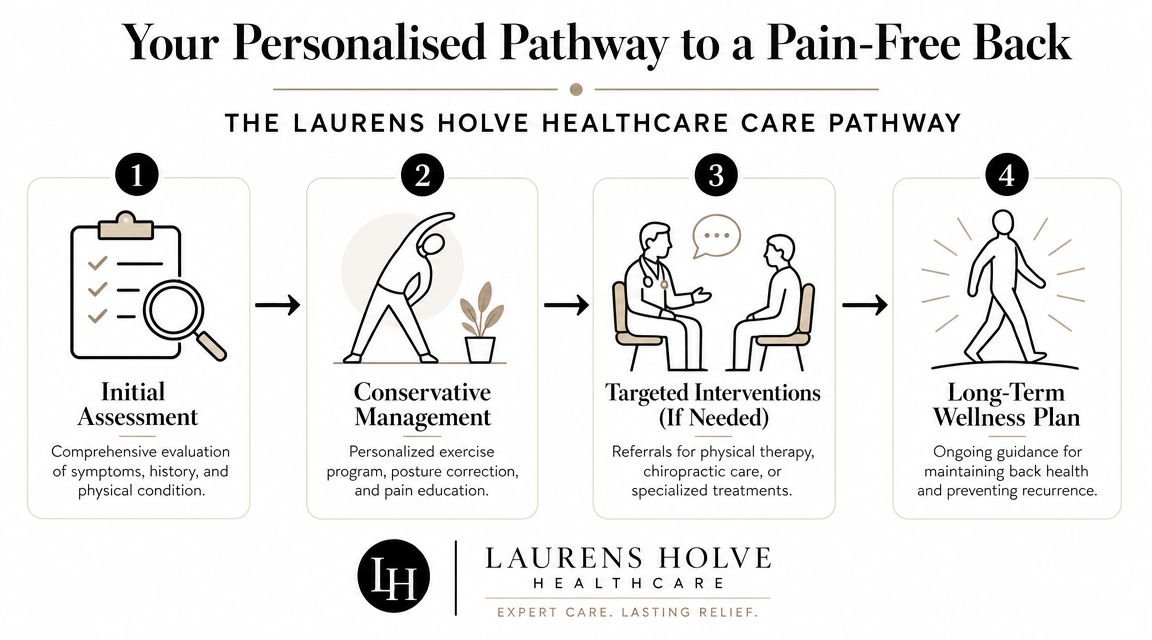
Relief is usually a sequence, not a single treatment
The most reliable route usually looks like this:
Settle the flare-up
Reduce aggravation, keep moving gently, use heat or cold appropriately, and avoid the trap of complete inactivity.Restore normal movement
Reintroduce walking, simple mobility work, and basic control exercises before stiffness and fear become the main problem.Build load tolerance
Strengthen the trunk, hips, and movement patterns that daily life depends on.Escalate when the pattern doesn't fit
Recurrent pain, leg symptoms, numbness, or stalled recovery deserve an assessment rather than more guessing.
That's the effective approach to the question of best relief for lower back pain. It's not one technique. It's the right treatment at the right stage. Some people improve quickly with self-care and exercise. Others need targeted hands-on treatment to restore movement and guide the right rehab. Others need referral because the pain pattern suggests sciatica or something less straightforward.
A calm plan works better than random treatment. Most backs respond well when the approach is organised, active, and matched to the symptoms in front of you.
If your lower back pain isn't settling, keeps returning, or you're no longer sure what's helping, Laurens Holve Healthcare provides osteopathy and acupuncture in North London and Woking, with assessment focused on identifying the mechanical cause of pain and building a clear recovery plan from hands-on treatment through to exercise and longer-term prevention.