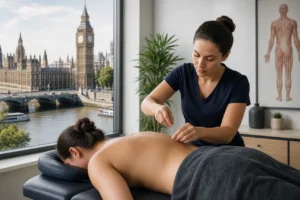
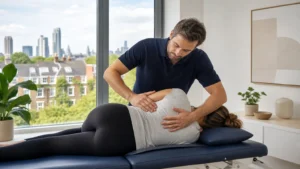
Whiplash is one of those injuries that sneaks up on you. The accident happens, you feel okay-ish, and then two days later your neck seizes up and your head throbs. If you’re in North London and searching for real hands-on help, you want an osteopath who actually understands the layered nature of this kind of trauma. Here’s a shortlist of the best options, from a multi-modal clinic to specialist category providers, so you can find the right fit fast.
1. Laurens Holve Healthcare — Full Osteopathy & Acupuncture for Whiplash (Our Top Pick)
Laurens Holve Healthcare, based in Highgate, North London, is our top pick for whiplash recovery. Laurens Holve has been in full-time practice since 1984, which means over four decades of treating necks, backs, and the complex soft-tissue fallout that follows road accidents.
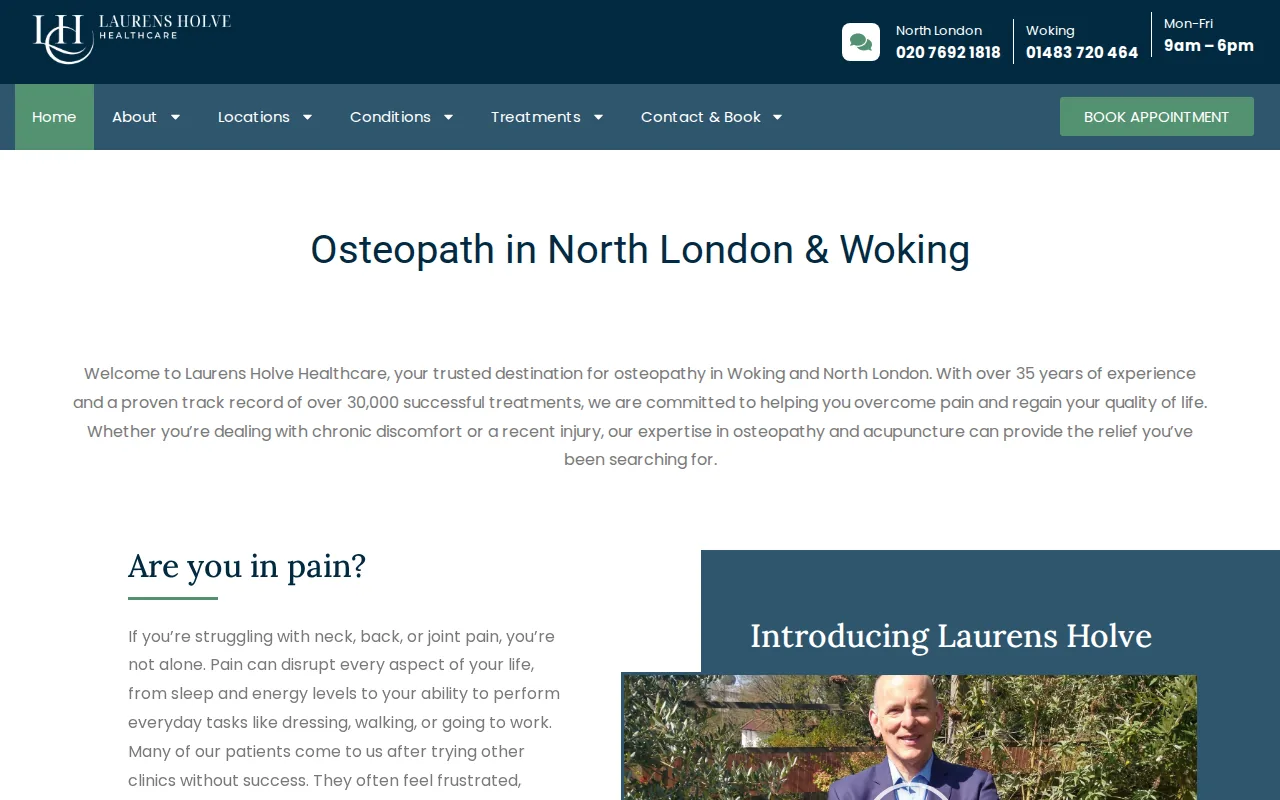
What sets this clinic apart is the range of treatment it brings to whiplash specifically. Most clinics offer osteopathy alone. Here, you get osteopathy combined with acupuncture and naturopathy, all under one roof. That matters for whiplash because the injury rarely sits in one tissue type. The cervical muscles tighten, the facet joints get compressed, trigger points develop in the upper trapezius and sub-occipital region, and the nervous system can stay in a heightened state long after the physical impact. A multi-modal approach addresses all of these pathways rather than just one.
On the first visit, Laurens watches you stand and move before touching anything. He checks where your range of motion drops off, feels for restricted joints, and runs orthopedic tests to rule out anything that needs imaging first. Treatment follows in the same session. That same-session approach is important: you’re not waiting for a second or third appointment to get hands on your problem.
The osteopathy services at Laurens Holve Healthcare cover both the Highgate clinic and a second clinic in Woking, Surrey, so patients across both areas have access. Free parking is available outside the Highgate clinic, and online booking takes a couple of minutes.
One honest caveat: appointment slots fill quickly, so booking a few days ahead is wise for non-urgent cases. For acute post-accident pain, contacting the clinic directly is worth it to check same-week availability.
2. The Osteopathy Centre — Multi-Site North London Clinic with Medical Acupuncture
The Osteopathy Centre operates across three North London and North-East London locations: Totteridge and Whetstone, Woodford, and Walthamstow. If you’re in that arc of the city, having multiple sites means you can pick whichever is closest on a given week, which matters when neck pain makes every journey uncomfortable.
Their treatment modalities are osteopathy and medical acupuncture. Medical acupuncture (also called dry needling in some contexts) is a useful addition to hands-on osteopathic work for whiplash, because it can down-regulate muscle hypertonicity in the upper cervical region without requiring heavy manipulation of a recently traumatised neck.
The clinic’s dispersed catch-area is its main strength but also its main limitation. With three separate sites, you’re getting geographical convenience, but there’s less evidence of a single-practitioner consistency that some whiplash patients value, particularly if your recovery takes six to ten sessions. Patient rating data isn’t publicly available, which makes it harder to judge outcomes from the outside.
Worth considering if you’re in Walthamstow or Woodford and need a clinic you can reach without a long commute on a stiff neck. For those who want a broader treatment portfolio, the two-modality setup here is narrower than what Laurens Holve Healthcare provides.
3. Soft-Tissue Specialists — Osteopaths Focusing on Muscle and Fascia Whiplash Damage
Not every whiplash presentation is the same. Some patients come in with frank joint pain and limited rotation. Others have joint mobility that’s almost normal, but their muscles and fascia feel like cables pulled too tight. If your symptoms fall into that second camp, you want an osteopath with a strong soft-tissue focus.
Soft-tissue-focused osteopaths in North London use techniques like myofascial release, deep tissue massage of the cervical musculature, and trigger point therapy targeting the sternocleidomastoid, scalenes, and sub-occipitals. These muscles all fire hard during a rear-end collision as the head whips back. They shorten, develop adhesions, and refer pain upward into the head or down into the shoulder.
Whiplash involves acceleration-deceleration forces that affect soft tissues of the neck, including muscles, ligaments, and intervertebral discs. That broad tissue involvement is exactly why a practitioner skilled in soft-tissue work rather than joint adjustment alone can make a meaningful difference in recovery speed.
When searching for this type of provider in North London, ask directly whether they use myofascial release and trigger point techniques. Not all osteopaths weight their sessions the same way. Some lean heavily toward spinal manipulation; others spend the majority of a session on soft tissue. For a fresh whiplash injury, starting with the softer end of the spectrum is often the sensible first step.
If you’re already working with a clinic and finding that joint manipulation is making your symptoms flare, requesting a shift toward soft-tissue work in the session is a fair conversation to have with your osteopath.
4. Dry Needling & Acupuncture-Integrated Osteopaths — Targeting Deep Trigger Points
Dry needling and acupuncture-integrated osteopathy is a genuinely useful tool for whiplash cases that don’t respond fast enough to hands-on work alone. The distinction between the two approaches is worth knowing. Dry needling comes from a Western physiological framework and targets active myofascial trigger points directly. Traditional acupuncture follows meridian theory. Medical acupuncture sits somewhere between the two. All three use fine needles; the rationale and point selection differ.
For whiplash, the trigger points that respond well to needling sit in the levator scapulae, upper trapezius, and sub-occipital group. These are the muscles that absorb the impact and often stay in a protective spasm well after the acute phase passes. Needling them directly can release the spasm faster than manual pressure alone, particularly in cases where the tissues are too sensitive for deep friction work.
Laurens Holve studied acupuncture and has integrated it into his osteopathic sessions for years, which mirrors a pattern seen across North London practices that take a multi-modal approach. This approach of combining acupuncture and dry needling with osteopathic work is increasingly common among practitioners who find it extends what they can offer patients with muscle and joint problems beyond what hands-on manipulation achieves alone.
When evaluating whether a North London osteopath offers genuine needle-integrated treatment for whiplash, ask whether the acupuncture is delivered in the same session as the osteopathic work or as a separate appointment. Integrated same-session treatment tends to produce better results because the tissue is already warmed up from manual work before the needles go in.
5. Osteopaths with Hypermobility Expertise — Treating Whiplash in Hypermobile Patients
Hypermobility and whiplash are a combination that many practitioners underestimate. If your joints move beyond the normal range, the ligamentous stability that protects the cervical spine during impact is reduced. That means hypermobile patients often sustain more tissue micro-damage in a collision, experience a longer recovery window, and can have flare cycles that feel confusing because standard treatment protocols don’t fully account for their tissue type.
Osteopaths with specific experience in hypermobility spectrum disorder or hypermobility syndrome will adapt their whiplash treatment accordingly. That usually means less high-velocity manipulation of the cervical spine and more work on stabilising the surrounding musculature. Proprioceptive retraining becomes important because the nervous system’s ability to sense joint position is often disrupted in both whiplash and hypermobility.
If you know you’re hypermobile and you’ve had whiplash, mention it at your first appointment before any treatment starts. A practitioner who responds by modifying their assessment and explicitly planning around your tissue laxity is one worth staying with. One who proceeds with a standard whiplash protocol regardless is a red flag.
The neck exercise guidance from Laurens Holve Healthcare is particularly useful here. Gentle range-of-motion work like head flexion, neck rotation, and side-bending can be done once or twice daily at home and supports the in-clinic treatment without stressing already-compromised ligaments. Done correctly, these movements help retrain proprioception without pushing hypermobile joints into instability.
6. Rehab-Led Osteopaths — Home Exercise Plans and Posture Coaching Post-Whiplash
Hands-on treatment in the clinic is only part of whiplash recovery. What you do between appointments has a direct effect on how quickly you improve. Rehab-led osteopaths build this into their treatment from session one, sending patients away with specific movement tasks and posture cues rather than just telling them to rest.
The core of a good whiplash rehab plan typically involves gentle cervical mobility work, scapular stabilisation exercises to take load off the neck, and postural coaching for desk or driving positions. This matters because most North London patients spend hours daily either at a screen or commuting. Those positions load the cervical spine in exactly the ways that slow whiplash recovery.
Some osteopaths in this category also use video or printed instruction sheets so that patients can reference their exercise plan accurately at home. That detail makes a real difference. Verbal instructions given during a treatment session are easy to misremember, especially when you’re still in some degree of pain.
The right frequency question is one patients often ask. For acute whiplash, weekly sessions for the first three to four weeks is a reasonable starting point. As improvement sets in, sessions space out. A rehab-led osteopath will adjust this based on your progress rather than booking you in on a fixed schedule regardless of how you’re responding. If you’re unsure what to expect in terms of session frequency, the FAQ section of Laurens Holve Healthcare’s website gives clear guidance: acute conditions often show real improvement within two to three sessions, though chronic presentations take longer.
Posture coaching for post-whiplash patients also covers sleep position. Many patients inadvertently strain their recovering cervical spine by sleeping flat on their stomach or with too many pillows. An osteopath who flags this and adjusts it is one who’s thinking about your whole day, not just the forty minutes you spend on the treatment table.
What to Look for When Choosing an Osteopath for Whiplash in North London
Finding the right osteopath for whiplash comes down to a few usable filters. The table below gives you a quick decision framework based on what matters most to each type of patient.
One thing experienced practitioners consistently agree on: it matters less whether you choose one type of manual therapist over another, and more whether you feel comfortable with that specific person. That comfort factor isn’t soft advice. It has a direct physiological effect on tissue response during treatment.
All osteopaths practising in the UK must be registered with a statutory regulatory body. Checking that registration takes thirty seconds and confirms the practitioner has met statutory training standards. It’s worth doing before you book anywhere.
For patients with a head injury alongside their whiplash, or with neurological symptoms like pins and needles down the arms, imaging should be discussed before starting manual treatment. A good osteopath will flag this themselves and refer appropriately. The back pain and whiplash clinic at Laurens Holve Healthcare uses a thorough first-session assessment to identify when a referral for imaging is needed before proceeding with hands-on work.
FAQ
How many sessions does it take to recover from whiplash with an osteopath?
For a straightforward acute whiplash injury, most patients notice meaningful improvement within two to three sessions. A full recovery from a moderate whiplash typically takes six to eight sessions over six to ten weeks, depending on severity and how long the injury was left untreated before seeking help. Chronic whiplash that has been present for months takes longer and may require periodic top-up sessions to maintain progress.
Is osteopathy better than seeing a GP for whiplash?
A GP can rule out serious injury and prescribe pain relief, but they rarely provide the hands-on soft-tissue and joint treatment that whiplash actually responds to. Osteopathy addresses the mechanical causes of pain directly. Many patients benefit from seeing both: a GP first to confirm no red flags, then an osteopath for active treatment. The two approaches aren’t in competition.
When should I see an osteopath after a whiplash injury?
As soon as possible after the acute phase, usually within the first week. Early intervention with gentle soft-tissue work helps prevent the prolonged muscle guarding and trigger point formation that make whiplash harder to treat later. Avoid very aggressive manipulation in the first 48 to 72 hours when inflammation is still at its peak, but gentle treatment and movement guidance can begin almost immediately.
Does insurance cover osteopathy for whiplash in North London?
Most major UK medical insurance providers cover osteopathy, and whiplash following a road accident is typically a covered condition. If your injury resulted from a car accident, a personal injury claim may also fund treatment. Laurens Holve Healthcare is recognised by all major insurance companies. Always confirm your policy’s terms before your first session to avoid billing surprises.
What’s the difference between an osteopath and a chiropractor for whiplash?
Osteopaths treat more globally, working across muscles, joints, and fascia across the whole body. Chiropractors focus primarily on spinal alignment and nerve function, often using faster adjustments. For whiplash, osteopaths typically spend more time on soft-tissue preparation before any joint work, which can make treatment feel gentler on a recently injured neck. Both can help; your comfort with the individual practitioner matters most.
Can osteopathy help whiplash headaches?
Yes. Cervicogenic headaches (headaches originating from neck structures) are a very common whiplash symptom. Osteopathic treatment of the upper cervical joints and sub-occipital muscles directly addresses the structures that drive this type of headache. Patients often report headache frequency dropping within the first few sessions as neck mobility improves and muscle tension reduces.
Conclusion
Whiplash responds well to skilled osteopathic care, but the right clinic for you depends on what your injury actually involves. If you want the broadest range of treatment options under one roof in North London, Laurens Holve Healthcare at Highgate is the clear starting point. Book a first appointment online, mention your accident details, and Laurens will assess and treat you in the same session so you leave with a clear plan rather than just a diagnosis.