Office chair back pain is one of the most common complaints we hear from desk workers in North London and Woking. Hours of sitting compress the lumbar spine, tighten the hip flexors, and leave you stiff before the afternoon even starts. If you’re ready to do something about it, here are the five best providers who actually treat the root cause, not just the symptom.
1. Laurens Holve Healthcare (Our Top Pick) , Expert Osteopathy & Acupuncture
Laurens Holve Healthcare is our top pick for anyone dealing with back pain from prolonged sitting. The practice runs clinics in North London and Woking, and it combines osteopathy, acupuncture, and trigger point therapy into a single treatment plan tailored to you.
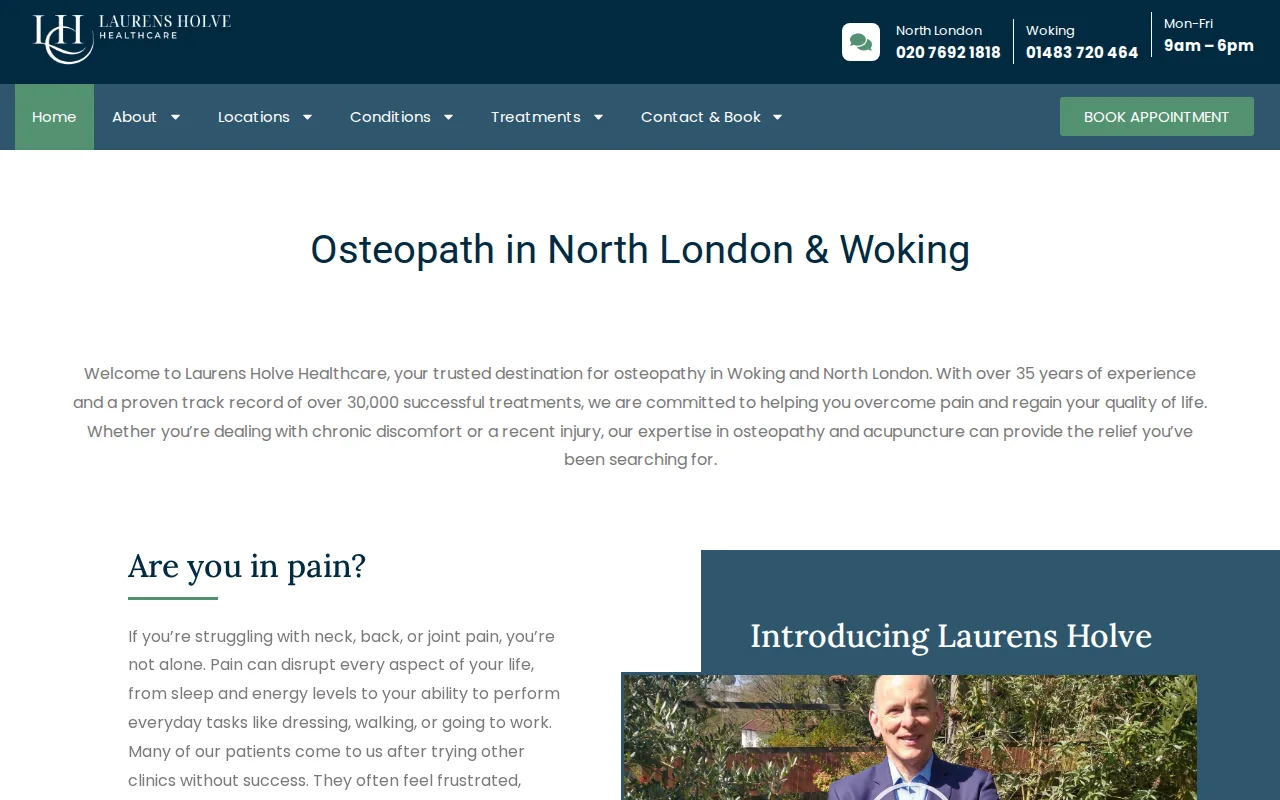
What sets this practice apart is volume and depth. With over 30,000 successful treatments, the team has seen virtually every pattern of desk-related back pain, from acute lumbar strain to chronic nerve compression that creeps in after years of poor seating. That breadth of experience means your presenting problem gets a proper read, not a one-size protocol.
For office chair back pain specifically, the approach starts with a full postural assessment. Laurens and the team look at how you sit, where your pelvis tilts, and which muscles are overworking to compensate. Then hands-on osteopathic treatment addresses the joints and soft tissue directly. Acupuncture is added when there’s a strong inflammatory or nerve-pain component, and trigger point therapy targets the stubborn knots that form in the glutes and mid-back after months of chair-sitting.
If your back pain has started radiating down your leg, it’s worth reading about sciatica treatment in London and Woking before your first appointment, so you arrive with a clearer picture of your symptoms.
The honest caveat: this is a premium, multi-modal practice. If you want a single quick massage and nothing more, the depth of assessment here may feel like more than you need. But if your pain keeps coming back, that depth is exactly why this clinic earns the top spot.
Wellthy also uses cranial osteopathy for patients in significant pain, which calms the nervous system response and makes the structural work more comfortable. Their first consultation includes a full case history, postural assessment, and a clear explanation of what’s causing your pain before any treatment begins.
If your back pain is acute and you want the fastest possible appointment, Wellthy’s intake process is thorough enough that it may feel slow. But for anyone with persistent or complex lower back symptoms, the depth of assessment is a feature, not a delay.
Sleep position also plays a bigger role in back pain recovery than most people realise. If you’re waking up stiff before you even sit down at your desk, it may be worth exploring sleep ergonomics to support your recovery alongside clinic treatment.
One pattern worth noting from our research: clinics that combine osteopathy with complementary therapies like acupuncture or dry needling tend to handle more complex back pain cases, yet they’re often overlooked by office workers who assume a single-modality clinic is enough. If your pain has persisted for more than 12 weeks, a multi-modal provider is the better starting point.
For a deeper look at how your workstation setup feeds into back pain, the guide on ergonomics in the workstation covers chair height, screen position, and spinal alignment in usable terms you can act on today.
Location is also a real factor. Our research found that 40% of the osteopathic clinics with a known location in this sample are in Woking, making it one of the more concentrated areas for office-worker back pain treatment in the region. North London has strong coverage too, with Laurens Holve Healthcare .
Can an osteopath actually fix back pain from sitting at a desk all day?
Yes, osteopathy is one of the most effective treatments for desk-related back pain. An osteopath assesses your posture, identifies which joints and muscles are under strain, and uses hands‑on techniques to restore movement and reduce pain. Guidelines recommend manual therapy as part of a treatment package, and most patients see meaningful improvement within a few sessions when the cause is mechanical.
How long does it take to get relief from office chair back pain?
For acute cases, most patients feel improvement within two to four weeks of starting treatment. Chronic pain that has built up over months or years typically takes longer, often six to twelve weeks of consistent treatment and exercise. The speed depends on how long the problem has been present, your adherence to any exercises given, and whether the underlying cause, usually posture and sitting habits, is also being addressed.
Should I see an osteopath or just buy a better office chair?
Both can help, but they work at different levels. A better chair reduces the mechanical load on your spine while you sit. An osteopath addresses the damage already done: the tight muscles, restricted joints, and nerve irritation that have built up. If your pain is already present, start with treatment. Once you’re improving, ergonomic changes to your chair and workstation help prevent it returning.
What’s the difference between osteopathy and dry needling for back pain?
Osteopathy uses joint articulation, soft tissue work, and sometimes manipulation to restore movement and reduce pain across the whole musculoskeletal system. Dry needling targets specific trigger points inside a muscle belly using a fine needle, releasing localised tension quickly. The two are complementary. Clinics like Compass Health Clinic use both; Laurens Holve Healthcare combines osteopathy with acupuncture for a similar effect on the nervous system and soft tissue.
Is it worth getting acupuncture alongside osteopathy for back pain?
For many patients, yes. Acupuncture is particularly useful when there’s a strong nerve‑pain or inflammatory component, which is common when back pain has been present for a long time. It can reduce pain sensitivity and improve sleep, both of which support recovery. Laurens Holve Healthcare integrates acupuncture with osteopathy as standard when the clinical picture calls for it, rather than treating it as a separate add‑on.
Do I need a GP referral to see an osteopath for back pain?
No. You can book directly with an osteopath without a referral from your GP. Osteopaths are trained to diagnose musculoskeletal conditions and will refer you to a GP or specialist if they find something outside their scope. Compass Health Clinic specifically highlights this, offering appointments within 24 to 48 hours with no referral needed, which is useful when pain is acute.
Conclusion
If you’re dealing with back pain from sitting, the clearest next step is a proper assessment rather than guessing at solutions. Laurens Holve Healthcare covers both North London and Woking, combines osteopathy with acupuncture and trigger point therapy, and brings over 30,000 treatments of experience to every case. Start there. And if you want to understand what’s happening in your body before you book, the guide on osteopathy for low back pain explains the mechanics in plain terms.