Your lower back’s been aching, and you’re not alone. The good news? You can start feeling better in just a few minutes a day, no gym kit needed. Across the most reliable health sources, around 85% of the top-rated lower-back moves need no equipment at all. Here are 10 of the best exercises for lower back pain, with form cues, reps, and a clear note on when to ease off, picked by the osteopaths at our back pain clinic in North London.
1. Pelvic Tilts , gentle lumbar warm-up
The pelvic tilt is a tiny rocking motion of the pelvis that wakes up your lower back and core. It’s the move we often start patients on because it’s nearly impossible to do wrong.
Best for: anyone in a flare-up who’s scared to move much yet. It teaches you how to engage the deep abdominal muscles that hold your spine steady.
Lie on your back, knees bent, feet flat. Flatten your lower back into the floor by gently tightening your tummy and tucking your tailbone. Hold for 5 seconds, then relax. Do 8 to 10 slow reps.
This warm-up matters because it primes the muscles you’ll use in every other move on this list. Lower back pain affects most adults at some point and is one of the most common reasons people see a doctor.
One caveat: if tucking the pelvis sharpens your pain rather than easing it, stop and try the cat-cow instead. Pain that gets worse during the move is your signal to back off.
2. Cat-Cow , spinal mobility flow
Cat-cow is a slow back-and-forth between arching and rounding your spine on all fours. It coaxes movement back into a stiff lower back without any load.
Best for: morning stiffness, or that locked-up feeling after a long drive.
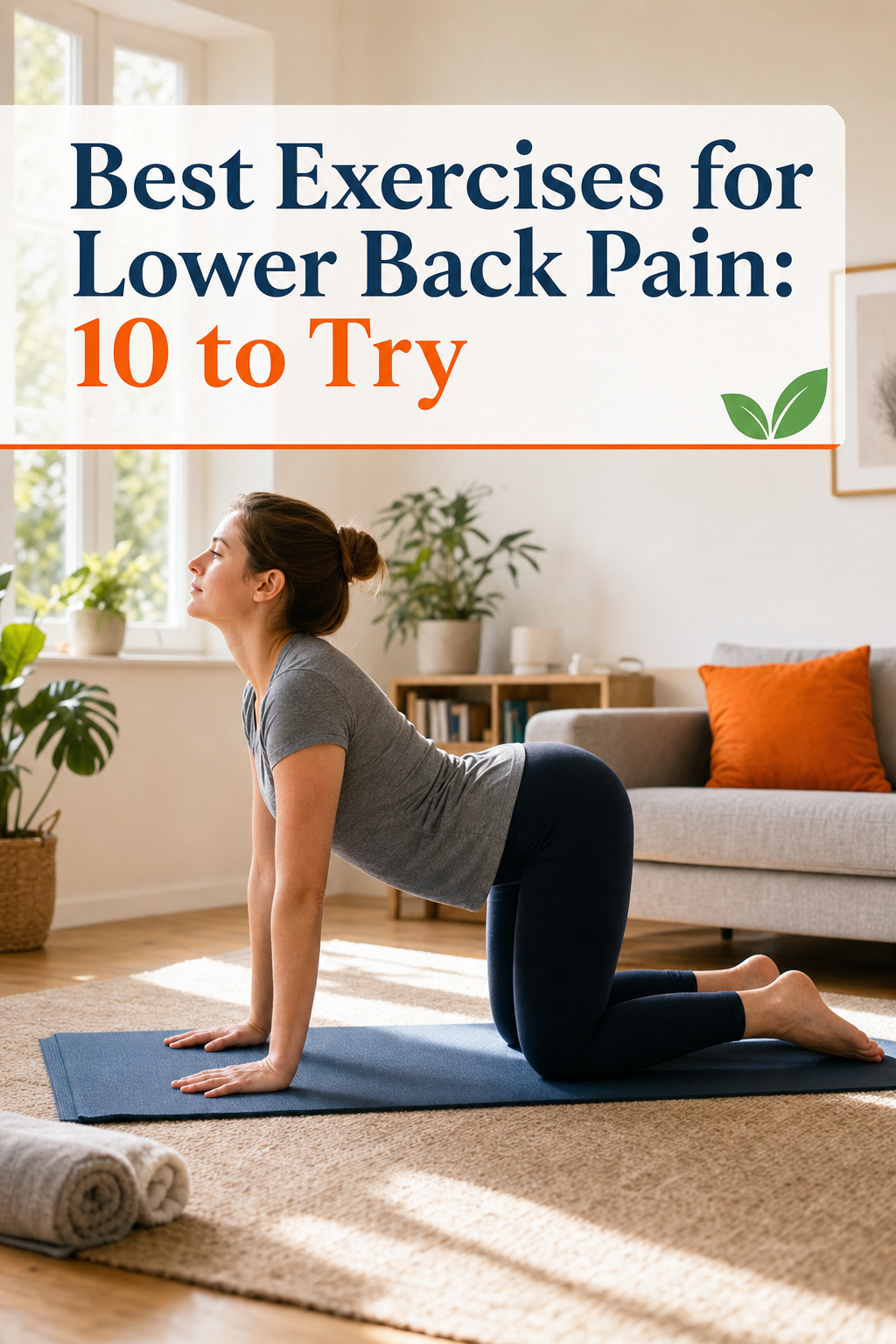
Start on hands and knees, wrists under shoulders, knees under hips. Breathe in as you drop your belly and lift your gaze (cow). Breathe out as you round your spine toward the ceiling and tuck your chin (cat). Move slowly with your breath for 8 to 10 cycles.
What makes cat-cow so useful is how it mobilises each segment of your spine through a full, gentle range. A lot of back pain is really stiffness from sitting too much, and this move directly answers that. If you spend your day at a desk, you’ll find more relief moves in our guide to exercises after sitting at a computer.
Keep the motion small if a big arch pinches. Range matters less than smooth, controlled movement here.
3. Knee-to-Chest , lumbar decompression stretch
The knee-to-chest stretch pulls one or both knees gently toward your chest to open up the lower back. It’s a quiet, lying-down release.
Best for: end-of-day tightness and that deep ache low in the spine.
Lie on your back, knees bent. Bring one knee up and clasp your hands behind the thigh or over the shin. Draw it toward your chest until you feel a comfortable stretch, hold 20 to 30 seconds, then swap. For a deeper release, hug both knees in together.
The reason this one feels so good is simple. It lengthens the muscles around your lumbar spine and lets the joints settle into a bit more space. Most people notice the ache soften within a few breaths.
Skip the double-knee version if you’ve got a known disc problem and it feels pinchy. One knee at a time is gentler on the spine.
4. Bridges , glute and core strengthener
The glute bridge lifts your hips off the floor to build strength in your backside and core. These are the muscles that take the load off an overworked back.
Best for: building real support so pain comes back less often.
Lie on your back, knees bent, feet flat and hip-width apart, arms by your sides. Squeeze your glutes and lift your hips until they line up with your shoulders and knees. Hold a second or two, then lower slowly. Aim for 10 reps.
The glute bridge strengthens the back muscles that support your whole body, and it scales nicely as you get stronger. Once 10 reps feel easy, hold longer or add a single-leg version.
The bridge still needs zero equipment. That’s exactly the kind of move we lean on first. If you already have a back injury, ease in and stop if pain climbs. Muscle soreness the next day is normal; sharp pain is not.
5. Bird-Dog , core stability and balance
The bird-dog has you extend an opposite arm and leg from an all-fours position. It trains your core to keep your spine steady while your limbs move, which is exactly what real life demands.
Best for: beginners and anyone rebuilding after an injury.
Start on hands and knees with a flat back. Tighten your tummy, then reach one arm forward and the opposite leg back until both are level with your body. Hold a few seconds, return, and switch sides. Do 8 to 10 per side, slow and controlled.
Here’s the interesting part. The bird-dog is one of the simplest moves in the entire dataset, yet it carries the highest tier of research backing alongside slow curl-ups and Pilates. You don’t need a yoga class four times a week to get strong. A few minutes daily does the job.
If your balance wobbles at first, that’s your core telling you it’s been asleep. Start with just the leg, then add the arm once you’re steady.
6. Figure-Four / Thread-the-Needle , hip-centric mobility
These two stretches target the hips and glutes rather than the back itself. Tight hips quietly pull on your lower back, so loosening them often takes the pain away.
Best for: people whose back hurts after walking or standing.
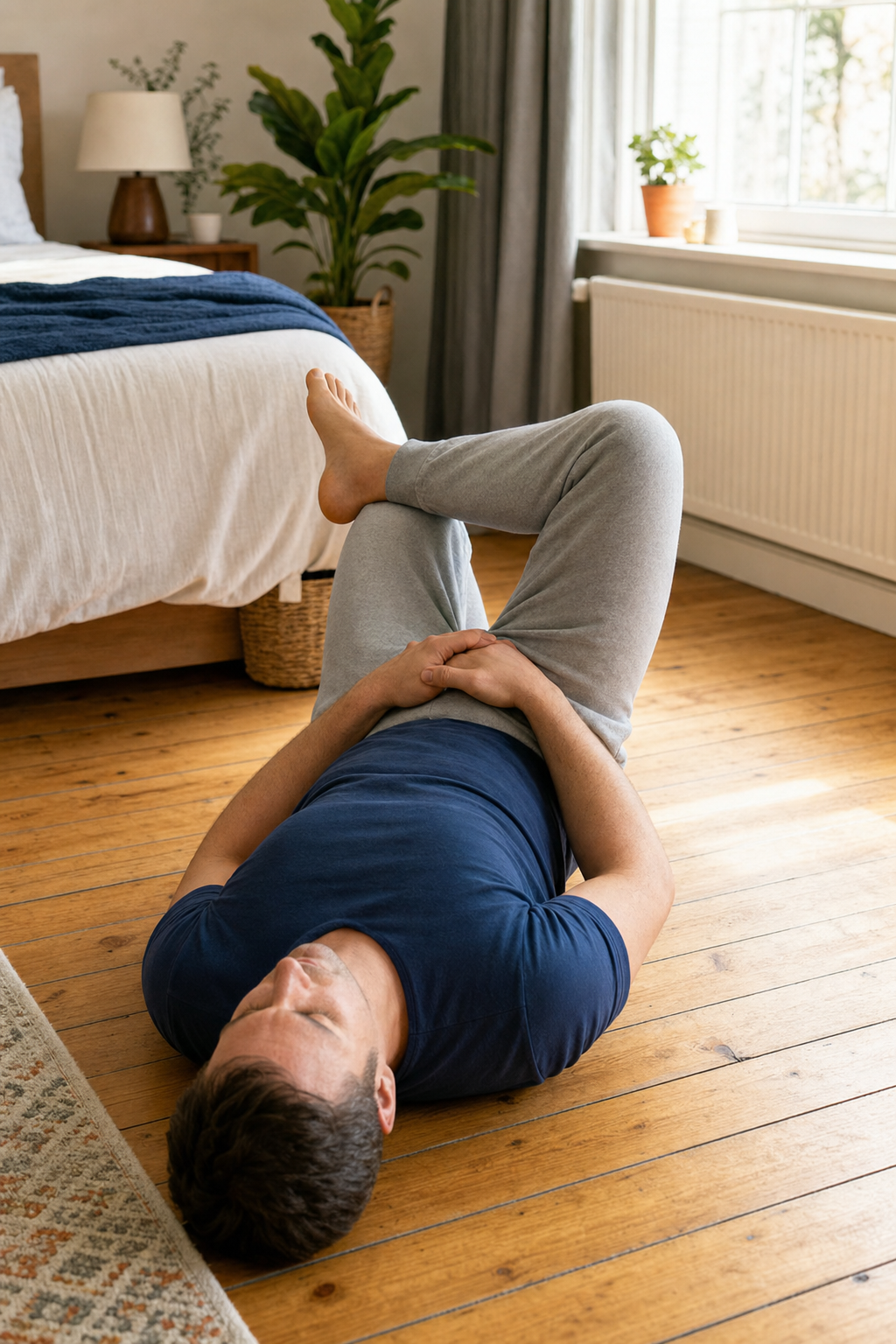
For the figure-four: lie on your back, cross one ankle over the opposite thigh, then draw that thigh toward you until you feel a stretch deep in the hip. Hold 30 seconds each side. For thread-the-needle, do the same crossed-leg setup and reach your hand through the gap to deepen it.
Hip mobility matters because when one link in the chain is stiff, the neighbouring part takes the strain. The painful back is often just the messenger. This hip-back link is something we see daily, and we cover it in detail in our piece on low back and hip pain and the hidden connection.
If a stretch shoots pain down your leg rather than easing your hip, stop. That can signal nerve irritation that needs a proper assessment.
7. Hamstring & Hip Flexor Stretches , release lumbar tension
Tight hamstrings tug on the pelvis and feed straight into lower back pain. Lengthening them gives your spine room to breathe.
Best for: anyone who can’t touch their toes and sits a lot.
The gentlest version: lie on your back, loop a towel around the ball of one foot, and slowly straighten that leg toward the ceiling until you feel a pull along the back of the thigh. Keep your lower back pressed lightly into the floor. Hold, breathe, then switch.
Hamstring stretches tend to work best when held for 30 to 60 seconds, twice daily. Tie them to your morning and bedtime routine and they’re easy to remember.
For the hip flexors, drop into a half-kneeling lunge and gently push your hips forward. Skip the standing toe-touch if you have a herniated disc; bending forward at the waist can aggravate it.
8. Supermans & Modified Planks , building back endurance
These two moves build endurance in the muscles that hold you upright all day. The superman targets your back extensors; the plank trains your whole core like a corset.
Best for: stepping up once the gentler stretches feel easy.
Superman: lie face down, arms and legs stretched out. Lift your arms, chest, and legs a few inches off the floor, squeezing your glutes and lower back. Hold briefly, then lower. The modified plank from your forearms and knees keeps your body straight while your core stays braced.
A plank creates a stiff, stable contraction through the whole trunk, far safer than old-school sit-ups that yank on your neck.
Build slowly. A 10-second modified plank done well beats a wobbly minute. If your lower back sags or aches during the hold, drop to your knees and shorten the time.
9. Senior-Friendly Moves , lying clams and gentle core holds
Many recommended stretches are too tough for over-65s and can cause more harm than good. These lying-down moves are gentle on the joints while still building real strength.
Best for: older adults who want to ease pain without getting up and down off the floor repeatedly.
Lying clams: lie on your back, feet together, knees bent to 90 degrees. Open your knees out to the sides, then squeeze them back together slowly, holding a second or two at each end. Dragging your heels back toward your tailbone as you go helps open up the hips. Do this for about a minute.
The bridge and the opposite arm-and-leg raise are both senior-safe staples too. Core muscles can generally be worked daily because they recover fast, so a little every morning adds up.
One rule for this group: move slowly and never throw a limb out fast. Controlled is the whole point. Painful joints need a steady tempo, not momentum.
10. The Two-Exercise Quick-Relief Protocol , for sedentary days
When you’ve been glued to a chair and your back has rusted up, two simple moves can break it free in under a minute. This is the rescue routine for desk days.
Best for: anyone who sits for hours and feels the stiffness set in.
First, the lying corkscrew: on your back, straighten one leg, bend the other to 90 degrees, and gently rotate that bent knee across your body toward the floor. Hold 10 to 15 seconds at a comfortable stretch, then repeat the other side. Second, walk. Gentle, regular walking is one of the most accessible things you can do to keep your back moving.
A sedentary lifestyle is one of the biggest drivers of lower back pain, because when you don’t move, everything tightens. These two moves cost you almost no time and you can do the corkscrew in bed first thing in the morning.
If 30 seconds of gentle rotation brings relief, great. If it doesn’t, or the ache keeps returning week after week, that’s the point to get assessed rather than chase quick fixes forever.
How Often, How Many, and When to Stop
Most of these exercises follow the same simple dosage: around 8 to 10 reps, or holds of 5 to 30 seconds, done once or twice a day. That’s it. Short, frequent sessions tend to beat occasional long ones, and the simplest moves can deliver pain relief with a fraction of the time.
The thing that trips people up most is reading their pain wrong. A bit of soreness during or after exercise is normal. Sharp, increasing pain is not. Use this quick guide.
Red flags that need a doctor straight away: pain radiating down a leg, numbness or weakness in a limb, or any change in bladder or bowel function. These are signs that warrant proper assessment rather than home exercise.
If your pain has dragged on for more than a week or keeps coming back, a hands-on assessment will save you guessing. At Laurens Holve Healthcare we look at the whole chain, hips included, to find what’s actually driving the pain, and you can read about that approach at our lower back page.
Frequently Asked Questions
What are the best exercises for lower back pain at home?
The best exercises for lower back pain at home are gentle, equipment-free moves like pelvic tilts, cat-cow, knee-to-chest, glute bridges, and the bird-dog. Around 85% of top-rated back exercises need no kit at all. Start with the gentler stretches, then add the strengthening moves as your pain settles. Do them once or twice daily.
How often should I do back exercises?
Aim for once or twice a day, every day. Most of these moves use light dosage, roughly 8 to 10 reps or short holds, so they don’t need recovery time the way heavy lifting does. Core and back muscles respond well to daily work. Consistency matters far more than long sessions, so a few minutes each morning beats one big weekly effort.
Should I exercise if my lower back already hurts?
Yes, in most cases gentle movement helps more than rest, but ease in carefully. Start with low-load moves like pelvic tilts and knee-to-chest. Mild aching during exercise is fine. Stop if pain sharpens, spreads down a leg, or comes with numbness. If pain lasts beyond a week or keeps returning, get a professional assessment.
Why do my hips matter for lower back pain?
Tight or stiff hips force your lower back to take on movement it isn’t built for, which creates strain and pain. Stretches like the figure-four and hamstring releases loosen the hips so your spine stops compensating. Many people find their back pain eases faster by stretching the hips than by stretching the back directly.
What exercises should I avoid with lower back pain?
Avoid moves that load a bent or rounded spine, like standing toe-touches and sit-ups, especially if you have a disc problem. Sit-ups mainly train hip flexors that can pull on your lower back. Skip any exercise that produces sharp pain or sends symptoms down your leg. When in doubt, choose the gentler, lying-down version of a stretch.
Where to Start
If you only pick two moves, start with the glute bridge and the bird-dog. Both are gentle, both carry strong research backing, and both take minutes a day. Build the stretches in as your back loosens. If the ache lingers past a week or keeps returning, book an assessment with the osteopaths at Laurens Holve Healthcare in North London or Woking, or browse our back pain clinic resources to plan your next step.